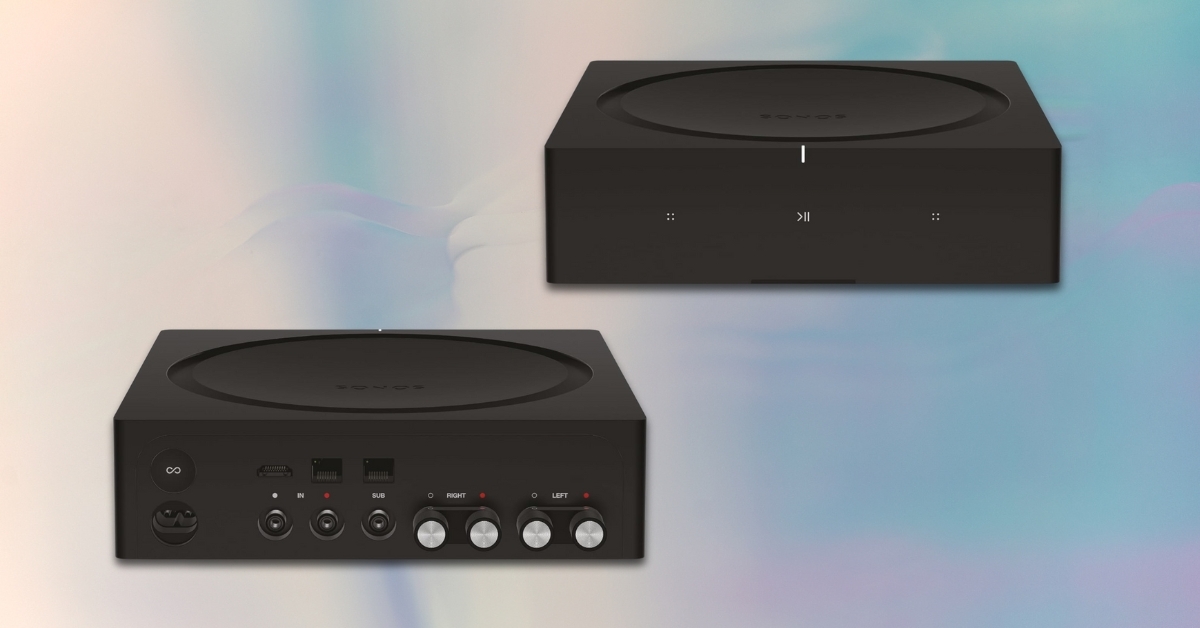
Great sound no longer requires stacks of bulky gear. Sonos Amp Reviews often focus on how this compact amplifier bridges classic speakers with modern streaming, and that reputation didn’t happen by accident.
The Sonos Amp turns passive speakers into a connected system that handles music, TV audio, and multi-room playback from one sleek box.
On Amazon US, the Sonos Amp typically sells for $699, placing it firmly in premium territory. That price sparks plenty of discussion, so it helps to understand what you actually get for the money.
From sound quality to daily usability, this breakdown covers real performance, practical limits, and how the Amp fits into modern home audio.
Sonos Amp Reviews: What the Sonos Amp Delivers
At its core, the Sonos Amp is a smart amplifier for passive speakers designed for people who already own quality speakers and want modern features without replacing everything.
It delivers 125 watts per channel at 8 ohms, enough power for most bookshelf and floor-standing speakers found in living rooms and media spaces.
Key highlights include:
- HDMI ARC for TV audio
- Wi-Fi and Ethernet connectivity
- Apple AirPlay 2 support
- Integration with the Sonos ecosystem
The compact chassis fits easily on shelves or inside cabinets, and the fan-less cooling system stays silent during playback.
Real-World Sound Performance and Daily Use
Sound quality remains the main reason people search for Sonos Amp sound quality feedback. In daily listening, audio comes through clean and controlled, even at higher volumes.
Bass stays tight, mids sound natural, and treble avoids harshness. The Amp handles long listening sessions without fatigue, which matters for both music and TV use.
Sonos reports that more than 70% of Amp owners connect speakers they already own, showing how often this device upgrades existing systems rather than replacing them.
That statistic lines up with real-world setups seen in home offices, living rooms, and even outdoor speaker zones.
Trueplay room tuning, available on iOS devices, adjusts output based on room acoustics. This feature noticeably improves balance in rooms with awkward layouts or reflective surfaces.
Connectivity Options That Actually Matter
The Sonos Amp focuses on practical inputs instead of clutter.
Connections included:
- HDMI ARC for televisions
- Stereo RCA input for external sources
- Subwoofer output with automatic crossover
- Banana plug speaker terminals
For vinyl fans, an external phono preamp is required. That limitation shows up frequently in Sonos Amp pros and cons discussions, especially among turntable users.
Streaming, App Control, and Multi-Room Audio
The Sonos app acts as the command center. It supports Spotify, Apple Music, Amazon Music, Tidal, Qobuz, and dozens more services.
Streaming stays stable even during long sessions, and multi-room grouping works smoothly with other Sonos speakers.
As a wireless home audio system, Sonos remains one of the easiest platforms to manage across rooms. Volume syncing stays tight, and switching between TV audio and music feels seamless.
Voice control works through compatible Sonos speakers rather than the Amp itself, which keeps the unit visually clean.
Using the Sonos Amp for TV and Home Theater
Many people exploring Sonos Amp vs AV receiver comparisons focus on TV performance. The Amp supports:
- 2.0 stereo setups
- 2.1 systems with a subwoofer
- 4.1 setups using wireless surrounds
Dialogue enhancement features help clarify speech, especially useful with modern flat TVs that struggle with vocal clarity. For most living rooms, the Amp replaces a traditional receiver without the complexity
Setup Experience and Installation Notes
Setup runs through the Sonos app with step-by-step guidance. Speaker wiring follows standard polarity markings, and Sonos recommends 14–16 gauge wire for best results.
Common setup issues usually involve:
- Wi-Fi congestion
- Incorrect speaker polarity
Both are easy to fix through in-app prompts. Ethernet remains an option for rock-solid performance in busy networks.
Sonos Amp Pros and Cons From Real Use
Pros
- Strong power output for most speakers
- Clean, neutral sound profile
- Excellent multi-room integration
- Compact and silent operation
Cons
- No built-in phono preamp
- Limited physical controls
- App-based EQ lacks advanced tuning
- Premium price point
These trade-offs matter depending on how the system is used.
Sonos Amp Price and Value Perspective
On Amazon US, the Sonos Amp price typically sits around $699, with occasional fluctuations. Compared to entry-level amplifiers, that cost feels steep.
Compared to combining a quality streamer, amplifier, and multi-room controller, the pricing becomes easier to justify.
For users considering a Sonos Port plus a traditional amp, the all-in-one design of the Amp often makes more sense long term.
Who the Sonos Amp Fits Best
The Amp works best for:
- Owners of passive speakers wanting smart features
- People building multi-room audio setups
- Clean, minimal entertainment spaces
- TV viewers seeking better sound without a full receiver
Listeners who prefer tactile knobs or deep manual EQ controls may find the app-first approach limiting.
Final Thoughts
Sonos Amp Reviews tend to stay consistent for a reason. This amplifier delivers reliable sound, modern connectivity, and a smooth daily experience without clutter.
The price asks for commitment, yet the performance, power, and ecosystem integration justify that cost for many setups.
Exploring the Sonos Amp on Amazon gives access to current pricing and related audio gear worth checking out alongside it.
If upgrading passive speakers while keeping things simple sounds appealing, this amplifier deserves a closer look.
Leave a Reply