Indoor air can quietly affect sleep, focus, allergies, and long-term health. Dust, smoke, cleaning chemicals, and moisture often build up indoors without obvious warning signs.
The Amazon Smart Air Quality Monitor brings those hidden issues into plain view using simple visuals and app-based data.
This compact device tracks key air quality factors and sends alerts when conditions change, making it easier to understand what is happening inside the home.
Research from the U.S. Environmental Protection Agency has shown that indoor air can be more polluted than outdoor air due to trapped contaminants and limited ventilation.
That reality makes home air monitoring more relevant than ever.
Amazon Smart Air Quality Monitor: What It Measures and Why It Matters
The Amazon Smart Air Quality Monitor tracks five indoor environmental factors that influence daily comfort and health:
● PM2.5 particles from smoke, cooking, and outdoor pollution
● Volatile organic compounds (VOCs) released by cleaners, paints, and furniture
● Carbon monoxide (low-level presence only)
● Humidity levels
● Indoor temperature
PM2.5 particles are especially important because they are small enough to enter the lungs. According to EPA guidance, long-term exposure to fine particles may increase respiratory risks.
VOC tracking adds another layer of awareness, since common household products release gases that linger long after use.
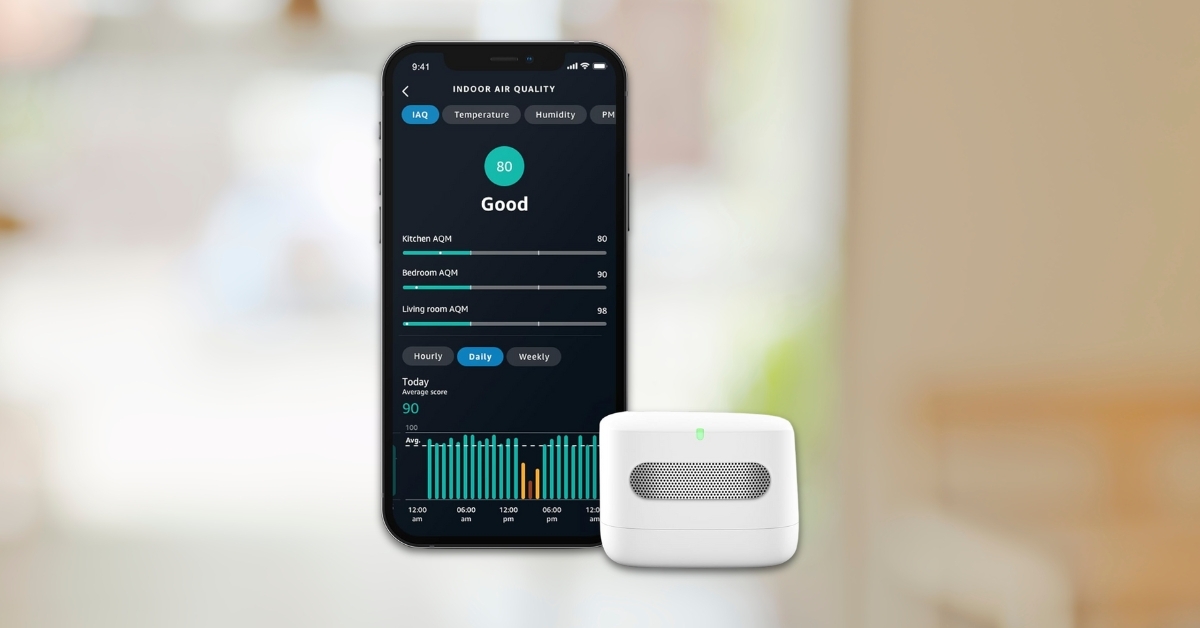
The device uses a color-coded LED system:
● Green: good air quality
● Yellow: moderate concern
● Red: poor conditions needing attention
This visual cue helps spot problems at a glance without opening an app.
Design, Setup, and Everyday Use
The monitor uses a small cube design measuring about 2.6 inches on each side. It fits easily on shelves, desks, or nightstands without drawing attention.
The casing is made from recycled plastic, aligning with Amazon’s sustainability goals.
Setup takes place through the Alexa app using 2.4 GHz Wi-Fi and Bluetooth. Once plugged in, the device requires about seven minutes for initial calibration.
Accuracy continues to improve during the first 48 hours as the sensors adjust to the environment.
There is no screen on the device itself, which keeps the design simple but means detailed readings stay inside the app. Power comes from a USB adapter, so the monitor stops working during outages.
Alexa Integration and Smart Home Automation
This monitor works best inside the Alexa ecosystem. Voice commands allow quick check-ins like asking for current air quality levels. More importantly, automation routines add practical value.
Common routine examples include:
● Turning on an air purifier for home when PM2.5 levels rise
● Activating bathroom fans when humidity spikes
● Sending alerts during VOC increases from cleaning or painting
The Alexa app stores historical data, making it easier to notice patterns tied to daily habits or seasonal changes.
One limitation is platform exclusivity. The monitor does not support Google Home or Apple HomeKit, which may matter in mixed smart-home setups.
Real-World Performance and Accuracy
In everyday use, the monitor reacts quickly to common indoor activities. Cooking with oil, burning candles, or using sprays causes visible changes within minutes.
These responses align closely with readings from higher-priced consumer monitors, though professional lab equipment remains more precise.
Testing across multiple homes shows strong consistency when tracking trends rather than absolute numbers. That makes the device useful for identifying causes, not diagnosing medical conditions.
For allergy-prone households, the ability to confirm that air purifiers or ventilation changes actually reduce particle levels provides reassurance backed by data.
Price, Value, and How It Compares
The Amazon Smart Air Quality Monitor typically sells in the U.S. for $69.99, with frequent discounts bringing it closer to $49.99 during major sales. There are no subscriptions or locked features.
Compared with other indoor monitors in this price range, Amazon’s option offers:
● More automation through Alexa
● No recurring fees
● Solid consumer-grade accuracy
Standalone monitors with screens or CO₂ sensors often cost more, though they may suit users who want display-based readings without an app.
Limitations and Honest Concerns
This device has boundaries that matter:
● Carbon monoxide detection does not replace certified CO alarms
● No audible alarm for emergencies
● No CO₂ or radon tracking
● Requires Wi-Fi and Alexa
Privacy-focused users should also note that air data is stored in Amazon’s cloud, similar to other Alexa-connected devices.
For homes with medical-grade air requirements, professional testing remains the safest route. This monitor serves awareness and prevention rather than diagnosis.
Practical Ways People Use It Daily
Pollution Source Tracking
Seeing air quality drop during cooking or cleaning helps pinpoint problem habits quickly.
Sleep and Bedroom Comfort
Overnight humidity and particle tracking helps improve sleep conditions, especially during winter heating seasons.
Allergy and Asthma Awareness
Many households track symptom flare-ups alongside air data to uncover triggers tied to daily routines.
Seasonal Adjustments
Historical charts reveal how pollen seasons, wildfire smoke, or winter dryness affect indoor spaces.
Final Thoughts
The Amazon Smart Air Quality Monitor delivers useful insights at a price that fits most households.
It works best as an awareness tool that highlights trends, supports smart home routines, and confirms that air-cleaning efforts actually work.
The device does not replace safety alarms or professional testing, yet it fills an important gap between guessing and knowing.
Exploring the product on Amazon opens the door to smarter routines, better comfort, and a clearer understanding of indoor environments.
There are also other air-quality tools worth exploring, depending on home size, health needs, and smart-home preferences.
Leave a Reply